
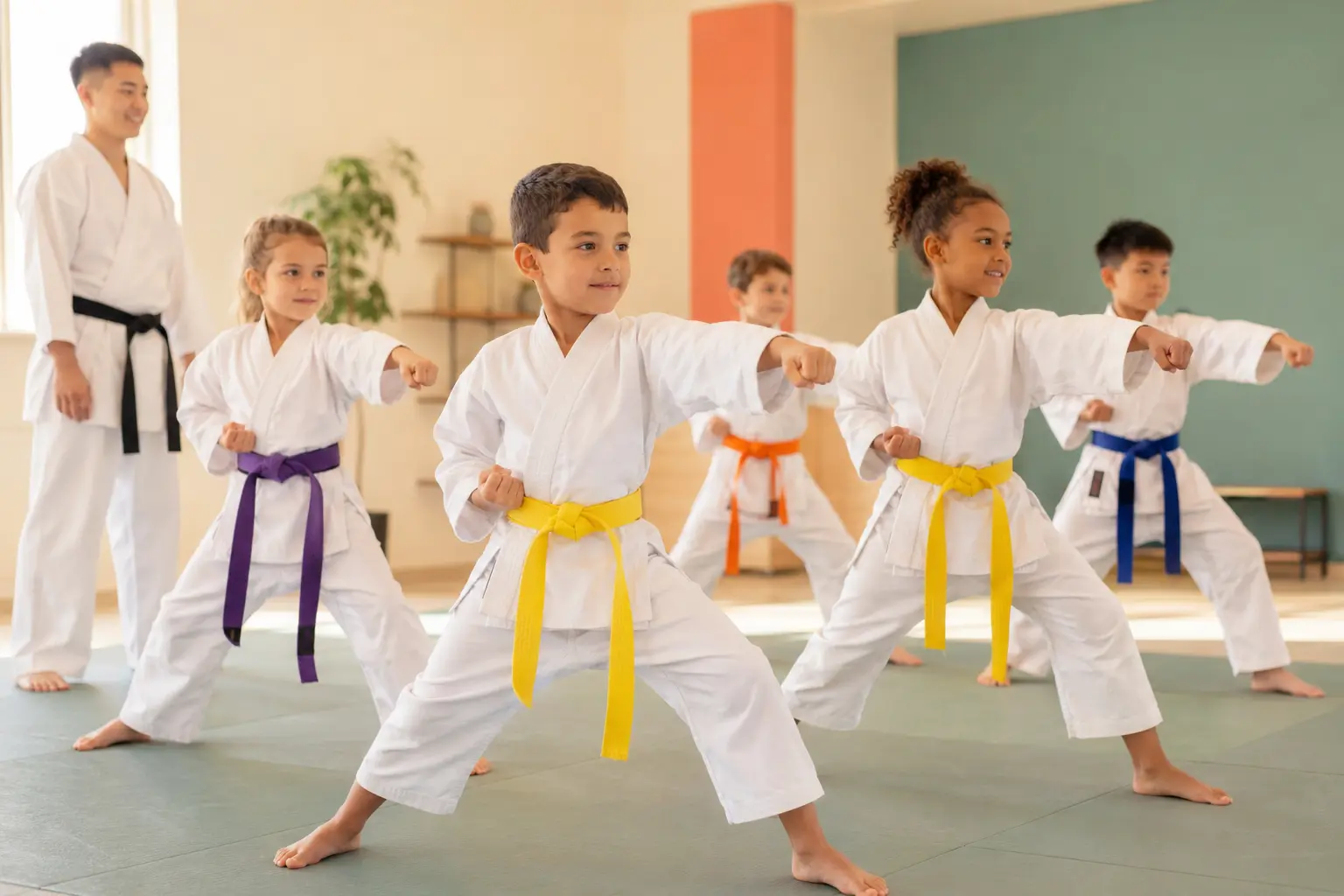
Before I started writing stories for children, I spent seventeen years teaching martial arts.
I taught adults, but a big part of my time was spent teaching kids, some as young as five.
And if you have ever tried to hold the attention of a room full of five-year-olds, you will understand why I now consider that excellent training for writing children's books.
Kids are wonderfully honest.
If they are interested, you know it.
If they are bored, you really know it.
They might start looking around the room, talking to the person next to them, fiddling with their belt, staring at the ceiling, or suddenly becoming deeply interested in something happening on the other side of the building.
You learn pretty quickly that saying, “Pay attention,” is not nearly as effective as giving them something worth paying attention to.
That lesson has stayed with me.
Keep Things Moving
One of the biggest things I learned while teaching martial arts was the importance of keeping a class moving.
Long explanations rarely worked well with younger kids.
So instead of teaching a large amount of information all at once, I would break things into smaller pieces.
Teach a little. Let them practice. Teach the next part. Practice again. Then move on.
It kept downtime to a minimum, gave the kids more actual training time, and helped them absorb what they were learning.
They were not standing around listening to me talk for ten minutes while slowly disappearing into their own thoughts.
They were doing something.
And that same idea has influenced the way I write stories.
When I am writing for kids, I try to keep the story moving too.
Something needs to happen.
Then something else needs to happen.
The characters need to be making decisions, solving problems, getting themselves into trouble, or trying to get themselves back out of it.
A children's story does not need to race along at full speed every second, but it does need a sense of movement.
Because just like in a martial arts class, too much standing around can lose the room.
Kids Learn Through Doing
Another thing I noticed over the years was that children often understood things better once they had actually tried them.
You could explain a technique perfectly.
You could demonstrate it beautifully.
You could explain exactly where their feet should go and what their hands should be doing.
But eventually they needed to give it a go.
Usually, the first attempt was not perfect.
Sometimes it was nowhere near perfect.
That was fine.
They tried it, adjusted, tried again, and improved.
Stories work in a similar way.
I do not want to tell a young reader that a character is brave.
I would rather put the character in a situation where they have to be brave.
I do not want to explain that friendship is important.
I would rather let the characters struggle, help each other, argue, make mistakes and eventually figure things out.
Kids are smart.
They do not always need the lesson explained.
Sometimes it is better to let them experience it through the story.
Fun Matters
Martial arts takes discipline.
There are techniques to learn, rules to follow and skills that take a lot of repetition.
But especially with kids, repetition does not have to mean boredom.
We were always looking for ways to make drills more dynamic.
Sometimes that meant changing the format.
Sometimes it meant adding a challenge.
Sometimes it meant turning something repetitive into a game.
The skill being practiced might have been exactly the same, but the way we presented it could completely change the energy in the room.
That taught me something important.
Kids can work hard and have fun at the same time. In fact, quite often they work harder when they are having fun.
I think the same is true of books.
A story can have meaning without feeling like a lesson.
It can explore courage, friendship, teamwork, persistence or doing the right thing while still being funny, adventurous and entertaining.
I want kids to enjoy the story first.
If they happen to take something useful from it along the way, even better.
You Quickly Learn What Gets a Reaction
Teaching kids also gives you a very good sense of what they find funny.
And sometimes it is not what adults expect.
Children have their own sense of humor.
They love surprises.
They love characters doing ridiculous things.
They love moments where they know something is about to go wrong.
And yes, depending on the age group, certain kinds of silly humor have an almost unbelievable success rate.
Anyone who has taught a room full of young children knows exactly what I mean.
You also learn that every child is different.
Some are loud and confident.
Some hang back and watch before joining in.
Some want to be first at everything.
Some are happy quietly working away.
Some need encouragement.
Some need a challenge.
Some need you to turn the whole thing into a game before they decide it is worth doing.
Spending so many years around different personalities helped me understand that children are not one audience.
They are individuals.
That matters when I create characters too.
The Best Part Was Watching Confidence Grow
One of my favourite things about teaching was watching a child slowly become more confident.
Sometimes a student would arrive unsure of themselves.
Maybe they were nervous about joining in.
Maybe they struggled with a technique.
Maybe they were afraid of getting something wrong.
Then, over time, things changed.
They learned.
They practiced.
They succeeded at something they could not do before.
And suddenly they stood a little taller.
Those moments stay with you.
They also influence the kinds of stories I enjoy writing.
I like characters who are learning as they go.
Characters who make mistakes.
Characters who are not perfect from the beginning.
Because that is much closer to real life.
And it gives kids someone they can root for.
Seventeen Years Is a Lot of Research
I never thought of teaching martial arts as research for writing children's books.
At the time, I was simply teaching.
But looking back, those seventeen years taught me an enormous amount about children.
What makes them laugh.
What keeps them interested.
What frustrates them.
What encourages them.
How quickly their attention disappears when something becomes boring.
And how completely engaged they can become when something captures their imagination.
So when I sit down to write now, part of me is still thinking like a martial arts instructor.
Keep it moving. Do not lecture. Give them something to do. Let them discover things for themselves. Make it challenging. Make it meaningful. And whenever possible... make it fun.
A. F. Sparks